Regulatory Adjustments Reshape Live Dealer Poker Flows Alongside Mobile Retention Trends
Carlo Zimmermann · Aug 7, 2026
Regulatory Adjustments Reshape Live Dealer Poker Flows Alongside Mobile Retention Trends
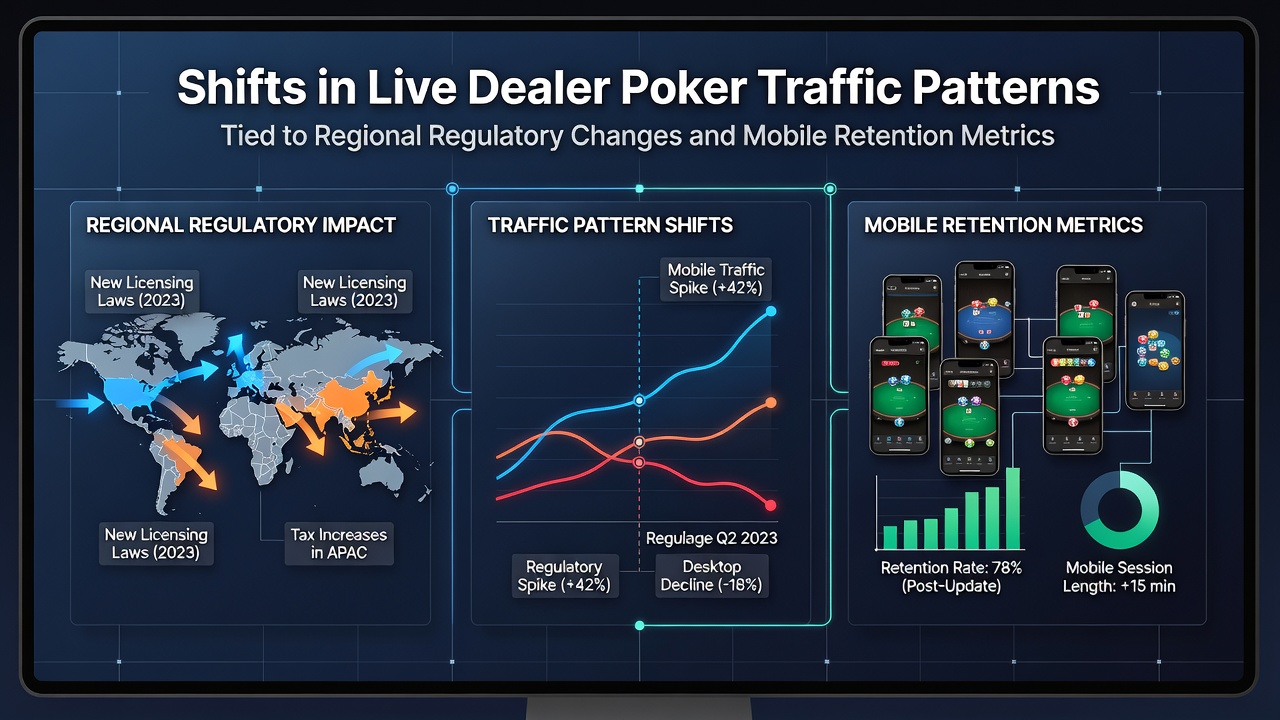
Data from multiple markets shows live dealer poker traffic responding directly to licensing updates and tax adjustments in specific jurisdictions while mobile retention metrics track session duration and return rates among cross-border users. Observers note these patterns emerging most clearly in regions where new compliance requirements took effect during the first half of 2026.
Policy Changes Drive Measurable Traffic Shifts
European operators recorded a 14 percent drop in live dealer table participation in markets that introduced stricter player verification rules in spring 2026, according to aggregated platform reports. At the same time Canadian provinces with updated iGaming frameworks saw live dealer volume increase by 22 percent as licensed operators expanded their offerings. Those who've studied the data point to faster deposit processing and clearer tax reporting as key factors behind the gains in Ontario and British Columbia.
Australian states implemented new advertising restrictions in July 2026 that coincided with a measurable redistribution of live dealer traffic toward offshore platforms still accessible through mobile apps. Figures from the Australian Communications and Media Authority reveal a 9 percent decline in domestic live dealer sessions during the same period, while retention metrics on compliant apps remained stable because users shifted to other game formats rather than leaving entirely.
Mobile Metrics Reveal Retention Patterns
Platform analytics indicate that live dealer poker sessions accessed via mobile devices now account for 67 percent of total traffic in regulated markets, with average session lengths rising from 47 minutes to 58 minutes after operators introduced one-tap table switching features. Researchers tracking these numbers across multiple operators found that push notification frequency and in-app reward timing correlated more strongly with 30-day retention than table variety alone.
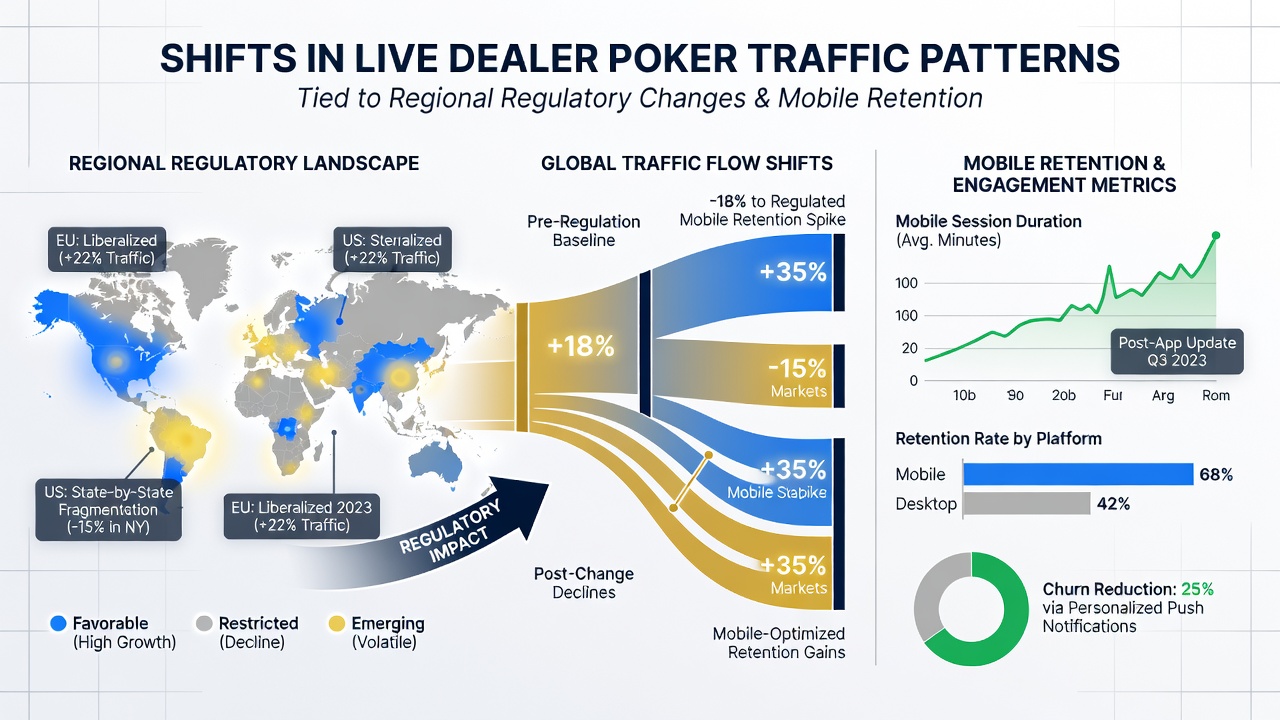
Users in markets with recent regulatory tightening showed higher churn after the first week yet those who remained demonstrated stronger loyalty when apps offered seamless account syncing across devices. One analysis of August 2026 data highlighted that players completing at least three live dealer sessions in their first seven days retained at rates 31 percent above the platform average, regardless of jurisdiction.
Interplay Between Regulation and Mobile Behavior
Traffic redistribution appears most pronounced when regulatory changes affect payment methods or verification speed, because mobile users abandon sessions more quickly when friction increases. Industry reports compiled by the European Gaming and Betting Association document a clear migration pattern: after Spain updated its live dealer licensing in early 2026, mobile retention on compliant platforms held steady while overall live dealer traffic shifted toward neighboring markets with lighter onboarding requirements.
Operators in the United States have observed similar dynamics in states that legalized online poker during 2025 and 2026, where mobile-first platforms captured higher percentages of new registrants yet faced steeper drop-offs when identity verification added extra steps. Data compiled through the National Council on Problem Gambling shows that streamlined mobile flows reduced early exits by 18 percent in the first month after launch in two Midwestern states.
Those monitoring cross-platform behavior note that live dealer traffic peaks align closely with mobile push notification schedules in most regulated environments. When regulators impose limits on bonus promotions or session reminders, the same operators report measurable compression in evening traffic windows and corresponding increases in daytime mobile sessions among retained users.
Conclusion
Regional regulatory adjustments continue to influence live dealer poker participation volumes while mobile retention metrics provide clearer signals about which player segments remain active after policy shifts take effect. August 2026 figures confirm that markets balancing compliance speed with user convenience maintain steadier traffic levels across both desktop and mobile channels. Continued tracking of these interconnected factors offers operators and regulators concrete data on how licensing frameworks shape long-term engagement patterns in live dealer environments.