7 Jul 2026
Regional Rules Reshaping Bonus Access for Elite Players in Virtual Card Games

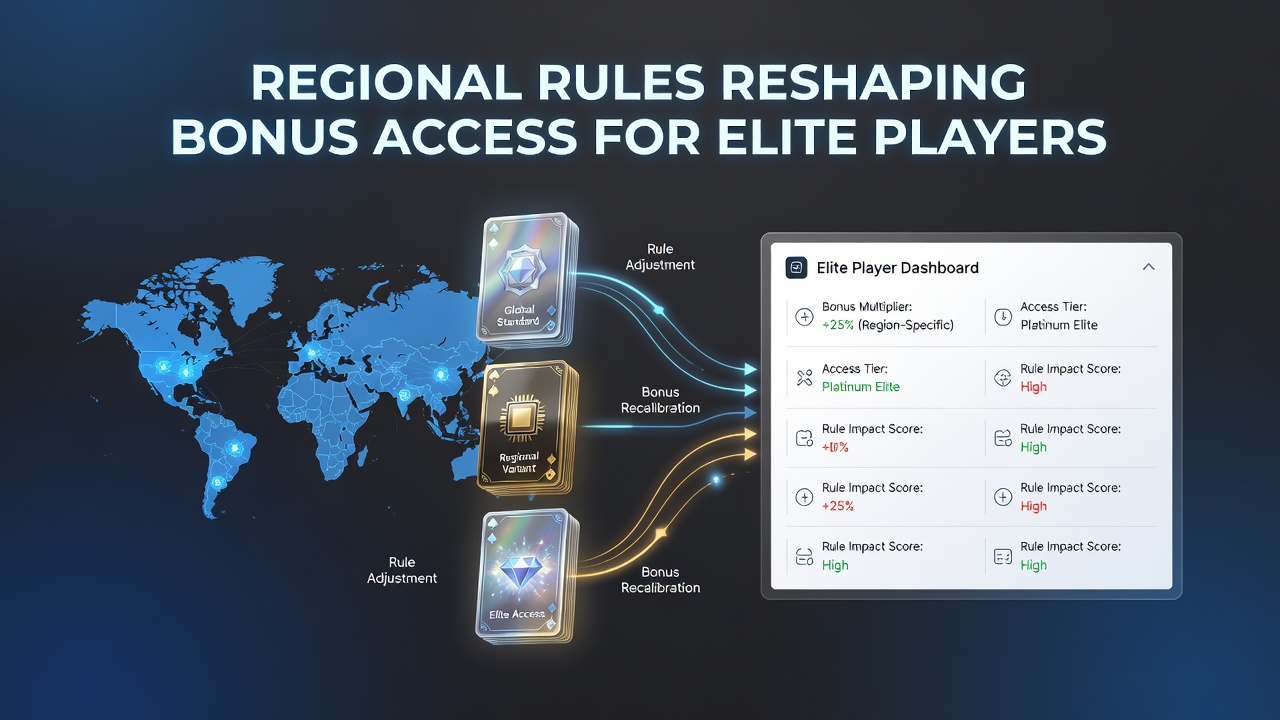
Regulatory developments across multiple jurisdictions continue to influence how bonus programs operate within virtual card game platforms, and elite competitors encounter shifting eligibility criteria as a direct result of these measures. Governments in Europe, Asia, and the Americas have introduced frameworks that tie bonus distribution to licensing conditions, player verification standards, and revenue reporting requirements, which in turn affect access for high-volume participants. Data from industry tracking services shows that platforms must now segment bonus offers by geographic region to remain compliant, creating distinct pathways that depend on where an account is registered and where the player resides.
European Frameworks and Cross-Border Adjustments
European authorities have expanded licensing protocols that require operators to demonstrate responsible distribution of promotional rewards, and these rules have prompted virtual card platforms to revise tiered bonus structures for ranked users. Research compiled by the European Gaming and Betting Association indicates that member states increasingly mandate real-time monitoring of bonus redemptions, which limits the ability of elite players to combine offers across multiple sites when accounts are flagged under shared regulatory databases. Observers note that platforms operating under Malta or Gibraltar licenses have responded by introducing region-specific reward pools, allowing continued participation for users while satisfying local transparency demands. By July 2026, several additional member states are scheduled to align their reporting systems, which will further standardize how bonus values are calculated based on verified player location rather than self-reported data.
North American and Latin American Regulatory Patterns
Canadian provinces and several Latin American countries have implemented player segmentation rules that separate bonus access according to licensing categories, and elite competitors in these markets must now complete additional verification steps before qualifying for loyalty or volume-based rewards. The Alcohol and Gaming Commission of Ontario has published guidelines requiring platforms to maintain separate bonus ledgers for different player tiers, ensuring that promotional funds do not cross into restricted categories without explicit approval. Figures released by regional gaming associations reveal that participation rates among top-ranked players have stabilized after initial adjustments, as platforms adapted by offering localized reward schedules that align with provincial or national caps on promotional spending. These changes have produced parallel systems where the same game title may carry different bonus multipliers depending on the jurisdiction in which the account is active.
Asian Market Developments and Platform Responses
Regulators in parts of Asia have introduced certification requirements that link bonus eligibility to audited transaction histories, and virtual card game operators have adjusted their algorithms accordingly to prevent unauthorized stacking of rewards across borders. Industry reports document that platforms serving these markets now deploy geo-fencing tools that automatically restrict certain bonus types once a player’s location data indicates movement into a stricter regulatory zone. Those who have examined participation logs note that elite users often maintain multiple verified profiles tied to different regions, yet operators have begun cross-checking against centralized databases to enforce single-account policies. Such measures have reduced instances of bonus arbitrage while preserving access for players who remain within approved jurisdictions.
Technical Implementation and Player Verification
Platform operators have invested in enhanced identity verification systems that integrate government-issued documentation with transaction monitoring, and these tools now determine which bonus categories remain available to any given account. Research conducted by academic groups studying digital gaming ecosystems shows that verification completion rates among high-ranking players have risen steadily since 2024, coinciding with the rollout of automated compliance checks. When players relocate or change their primary residence, platforms must recalculate bonus eligibility under the new regional rules, often resulting in temporary holds until documentation is updated. This process has become standard across major operators and has produced consistent data trails that regulators can audit without disrupting ongoing gameplay.
Impact on Tournament and League Structures
Virtual card game tournaments and ranked leagues have incorporated regional compliance flags into their entry requirements, and elite competitors must confirm their eligibility before bonus-enhanced prize pools become accessible. Reports from trade associations tracking digital card play indicate that organizers now publish separate terms for each licensing region, listing which rewards apply and which do not. Players who compete across multiple events therefore review these terms in advance to avoid disqualification from bonus components. Data collected through 2025 demonstrates that platforms maintaining clear regional distinctions have retained higher retention among top performers compared with those that attempted uniform global bonus systems.
Conclusion
Regional regulatory frameworks continue to define the boundaries of bonus access for elite participants in virtual card games, and operators have responded by building segmented systems that satisfy local requirements while preserving competitive opportunities. Verification procedures, geo-fencing technology, and audited reporting have become standard features that shape how rewards are allocated. As jurisdictions prepare further updates scheduled around July 2026, platforms and players alike are adapting to maintain compliance without sacrificing participation in high-stakes environments. These developments reflect a broader pattern in which geographic rules directly determine the structure and availability of promotional benefits across the sector.