14 Jun 2026
Regional regulatory tweaks reshaping participation flows in borderless digital card competitions
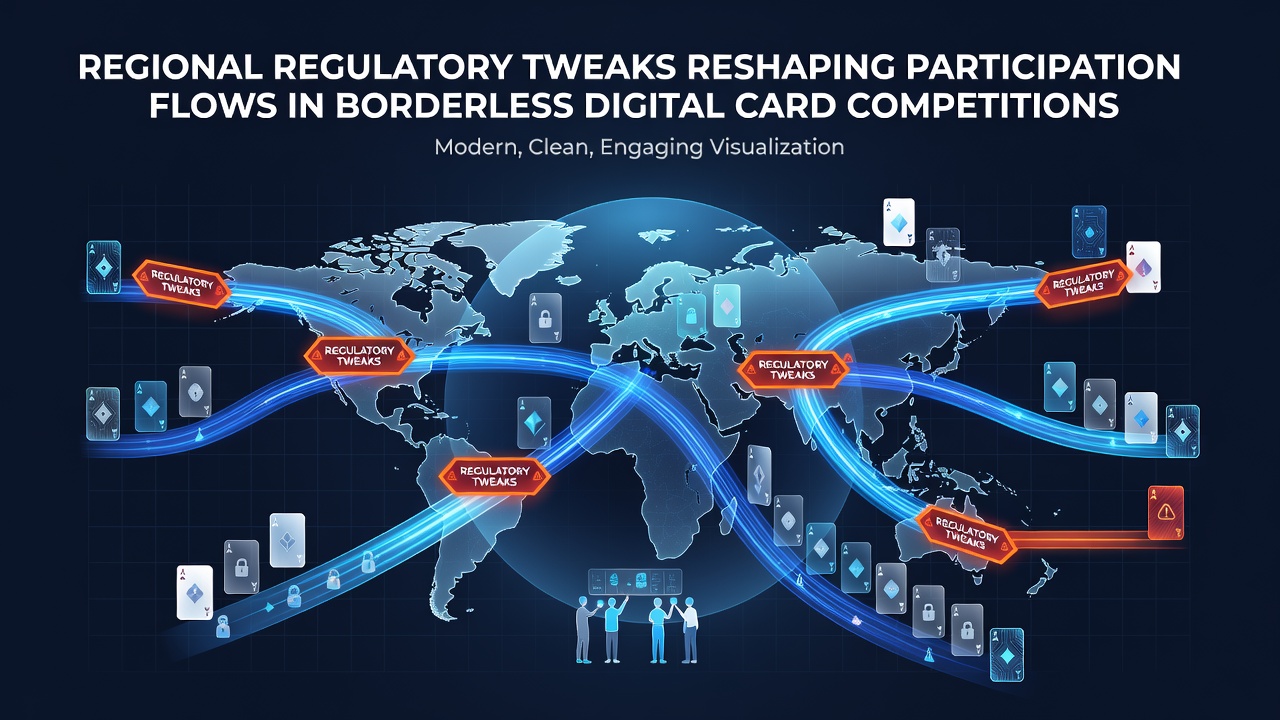
Regional regulatory adjustments continue to influence how participants engage with borderless digital card competitions, and data from multiple jurisdictions shows measurable shifts in entry patterns since early 2025. Authorities in several areas have introduced modifications to licensing frameworks, payment verification processes, and cross-border eligibility rules that directly affect tournament access for players operating across multiple platforms.
Key regulatory modifications across major jurisdictions
European markets have seen incremental updates to virtual gaming directives, with countries like Malta and the Netherlands refining their approach to operator licensing and player verification protocols. These changes, rolled out progressively through 2025, require enhanced documentation for participants joining events that span international boundaries, leading to adjustments in registration volumes from certain regions. Meanwhile, North American developments include updates from state-level bodies such as the New Jersey Division of Gaming Enforcement, which adjusted compliance standards for digital card platforms in ways that impact how operators handle entries from outside the primary licensed area.
Asia-Pacific regulators have also contributed to the evolving landscape, where Australia’s communications and media authority released updated guidelines on interactive gaming participation that took effect in phases throughout late 2025. Those guidelines emphasize clearer distinctions between domestic and international competition formats, prompting platforms to implement region-specific filters that alter visibility of certain tournaments for users based on their location data.
Effects on player movement and entry statistics
Figures from industry monitoring services indicate that participation flows have redistributed following these adjustments, with some platforms reporting increased activity from jurisdictions that aligned their rules more closely with operator requirements while others experienced temporary dips during transition periods. Research compiled by the University of Nevada’s International Gaming Institute highlights how certification updates in multiple regions correlate with changes in average session durations and cross-platform entries, particularly in events that allow competitors from varied regulatory environments.
Payment processing modifications play a central role in these dynamics, as several authorities now mandate additional layers of transaction verification before funds can support entries in multi-jurisdictional competitions. This has prompted operators to streamline certain pathways while restricting others, resulting in observable rerouting of player traffic toward events hosted under frameworks that accommodate the new verification standards more readily.

Platform adaptations and compliance strategies
Operators managing borderless digital card competitions have responded by updating their systems to accommodate the patchwork of regional requirements, including geofencing enhancements and dynamic eligibility checks that activate based on user location and account verification status. These technical responses allow platforms to maintain access for eligible participants while aligning with updated rules that came into force at different points during 2025 and into 2026.
By June 2026, several anticipated refinements are scheduled to take effect in select markets, including further harmonization efforts around player fund segregation and reporting obligations that could further shape which competitions remain open to international entries. Platforms that have already integrated flexible compliance modules appear positioned to handle these upcoming shifts with minimal disruption to existing participation patterns, according to reports from the European Gaming and Betting Association.
Emerging patterns in competition accessibility
Observers tracking these developments note that the cumulative effect of regional tweaks has produced a more segmented yet still interconnected global environment for digital card competitions. Players in jurisdictions with streamlined approval processes often maintain broader access to events, whereas those in areas undergoing stricter transitions encounter temporary limitations that redirect their activity toward localized or semi-restricted formats.
Academic analyses published through gaming research centers continue to document these redistribution trends, showing correlations between specific regulatory announcements and subsequent changes in entry demographics. Such data helps illustrate how small adjustments at the regional level accumulate into larger shifts in how borderless competitions draw participants from around the world.
Conclusion
The ongoing series of regional regulatory modifications demonstrates a clear connection between policy adjustments and the practical flows of participation in borderless digital card competitions. As additional updates approach implementation dates in 2026, platforms and participants alike continue adapting to maintain access within the constraints of each jurisdiction’s evolving framework, with monitoring bodies tracking the resulting patterns across markets.