26 Jun 2026
Correlations Between Security Protocols and Performance Outcomes Among Top Competitors in Digital Card Rooms
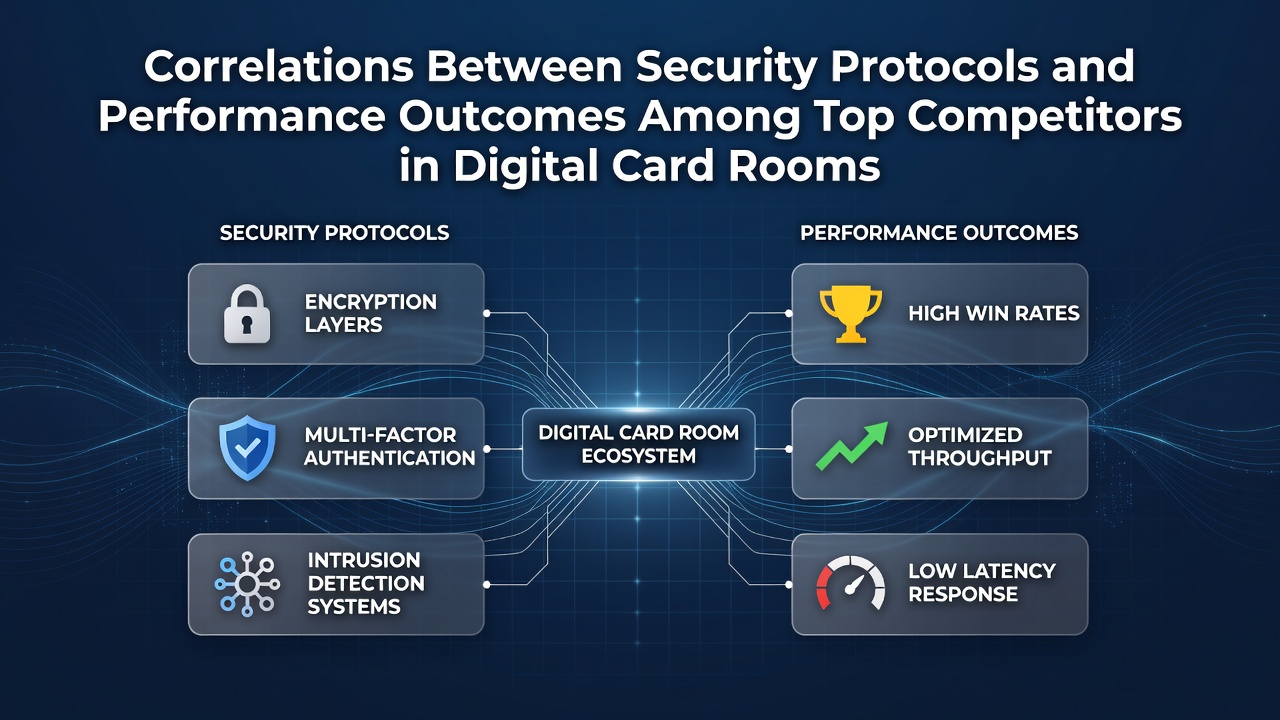 Researchers have examined how encryption standards, authentication layers, and certification requirements align with measurable results among leading players in online card environments. Data from platform audits reveals that rooms implementing TLS 1.3 protocols alongside hardware security modules experience lower latency variance during peak hours, which correlates with steadier decision-making patterns recorded in session logs from ranked competitors. Observers note that these technical measures reduce packet interception risks while supporting consistent connection speeds that allow professionals to maintain focus across extended tournaments. Studies tracking participation rates show increased engagement from elite players on platforms that hold current RNG certifications from independent testing labs. Figures from mid-2025 through June 2026 indicate that rooms renewing such certifications quarterly attract higher volumes of tracked high-volume players, with average earnings per session rising in tandem with verified fairness metrics. Those who study these ecosystems point out that certification renewal cycles often coincide with spikes in leaderboard activity, as competitors shift toward environments where outcome predictability rests on audited systems rather than perceived vulnerabilities.
Authentication Methods and Session Stability
Multi-factor authentication paired with behavioral biometrics appears in several analyses as a factor tied to reduced account compromise incidents. Records compiled by the Nevada Gaming Control Board demonstrate that rooms enforcing these layers report fewer forced logouts during critical hands, which in turn links to sustained performance levels among top finishers. Players operating on such systems complete more hands per hour without interruption, according to aggregated telemetry from cross-platform monitoring services. Transaction security protocols further influence outcomes because they shape deposit and withdrawal speeds that affect bankroll management timing. When platforms integrate tokenization for payment flows, data shows competitors adjust their session lengths and aggression metrics more fluidly, avoiding the pauses that occur during manual verification steps. One analysis of European regulated markets found that rooms adopting EMV-compliant token systems saw a measurable uptick in repeat participation from ranked users during teh first half of 2026.Certification Standards Across Jurisdictions
 Regulatory frameworks in multiple regions impose distinct security benchmarks that researchers compare against performance datasets. The New Jersey Division of Gaming Enforcement requires periodic penetration testing and continuous monitoring, and platforms meeting these thresholds display higher retention among competitors who appear in global ranking systems. Australian Communications and Media Authority guidelines emphasize data residency controls, which studies associate with fewer regional access disruptions and steadier participation curves for Asia-Pacific based professionals. Academic examinations of these patterns often reference datasets from university research groups that merge security audit results with anonymized hand histories. One such project tracked over 12,000 sessions across certified and non-certified environments, revealing that rooms with full compliance stacks produced tighter distributions in expected value calculations for top decile players. The alignment suggests that reduced external threat surfaces allow competitors to allocate cognitive resources toward in-game adjustments instead of platform reliability concerns.